July, 2014

All about invasive species
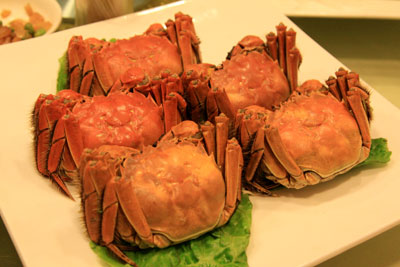
KENTARO IEMOTO
Every autumn,
Shanghai
goes crazy for
hairy crabs.
Diners feast on
these delicious shellfish
in restaurants all over the
city. Usually they eat them
steamed, with vinegar and
ginger. They see the animal
as a delicacy - an especially
desirable food item.
In Europe, however, hairy crabs are viewed very differently. They are seen as pests. They have torn up fishermen's fishing nets and dug into river dams with their strong, sharp claws. In Germany alone, they have caused more than S$100 million worth of damage.
Experts call the crabs an invasive species. This term is used to describe a species of plant or animal that enters a new habitat and ends up doing so well there that it is a danger to native species.
The crabs were first brought to Europe from China a century ago. It is believed that they hid themselves in tanks of water that ships carried. They had no natural predators in Europe, so they were able to multiply quickly. They spread throughout the river systems of the continent and made it difficult for native fish to survive.
Now, some towns in the Netherlands are trying to kill off the crabs by paying residents to catch them. But, they don't eat the crabs themselves. Instead, they are sent to factories, where they are converted into food for animals.
Chinese gourmets have been shocked to hear about this waste of good food. They are thinking of organising eating tours to Europe, so that they can help to reduce the hairy crab population while enjoying a delicious meal. The Dutch government is also thinking of exporting these crabs to China, where their flavour will be appreciated.
Other invasive species
Invasive species have been a problem for a very long time. For example, back in 1598, Dutch sailors discovered the island of Mauritius. They found a marvelous bird there called the dodo: a huge flightless pigeon, one metre tall.
They didn't realise that on their ships, they were carrying lots of European black rats. These rats ended up settling on the island and eating the dodos' eggs. Within just a hundred years, the dodo had gone completely extinct. (We sometimes refer to it when we say that something is "as dead as a dodo".)
Surprisingly, invasive species aren't always brought in by accident. The cane toad, for example, was introduced to Australia on purpose. It was native to Central America, but Australian sugarcane farmers wanted to use them to control their pests. In the end, the toads reproduced so fast that they became pests themselves. They have endangered local Australian animals, and have even killed humans and pets with their poison.
Another strange case of an invasive species is the European starling. This tiny black bird was introduced to the United States by an American man, just because he wanted his country to have one of every bird that was mentioned in Shakespeare's plays! Today, starlings are known to force American birds out of their nests, destroy entire fields of wheat and spread diseases among humans and animals.
Controlling invasive species
To prevent the spread of invasive species, governments now have strict laws about importing living animals and plants into their countries. This is why you are usually not allowed to bring fresh fruit with you when you fly overseas - just in case the fruit has insects or germs on it that could cause environmental damage.
Once an invasive species is present in a country, it is very difficult to reduce its numbers. All sorts of solutions have been tried, including poisoning and introducing predators to the environment. Both of these actions can ruin the ecosystem even further.
Nevertheless, it might be possible to solve the problem of the hairy crab. If more diners in Europe begin eating these creatures, then it will be profitable for companies to start catching them. This will bring down their numbers to manageable levels.
In fact, there are quite a few other invasive species that can be eaten. In the US, some people are now calling themselves "invasivores", because they've decided to change their diets to focus on the animals and plants that are ruining their environment.
They have a website with recipes using invasive species as ingredients. These include as the fast-growing Japanese creeper kudzu, which has become common in the southeast of the country, and can be made into a good cooking starch. They also encourage people to eat lionfish, which are originally from the Pacific Ocean, but have now become common in the Caribbean Sea.
Meanwhile, in the rest of the world, climate change has led to a huge rise in the number of jellyfish. Their population is causing problems both for marine life and humans. Recently, a swarm of jellyfish ended up shutting down a nuclear power plant in Sweden.
Many Chinese restaurants in Singapore already serve jellyfish. For the sake of the environment, would you be willing to eat more of this animal and become an "invasivore" yourself?
This article by NG YI-SHENG first appeared in the November 2013 issue of What's Up. Re-published here in July, 2014.
In Europe, however, hairy crabs are viewed very differently. They are seen as pests. They have torn up fishermen's fishing nets and dug into river dams with their strong, sharp claws. In Germany alone, they have caused more than S$100 million worth of damage.
Experts call the crabs an invasive species. This term is used to describe a species of plant or animal that enters a new habitat and ends up doing so well there that it is a danger to native species.
The crabs were first brought to Europe from China a century ago. It is believed that they hid themselves in tanks of water that ships carried. They had no natural predators in Europe, so they were able to multiply quickly. They spread throughout the river systems of the continent and made it difficult for native fish to survive.
Now, some towns in the Netherlands are trying to kill off the crabs by paying residents to catch them. But, they don't eat the crabs themselves. Instead, they are sent to factories, where they are converted into food for animals.
Chinese gourmets have been shocked to hear about this waste of good food. They are thinking of organising eating tours to Europe, so that they can help to reduce the hairy crab population while enjoying a delicious meal. The Dutch government is also thinking of exporting these crabs to China, where their flavour will be appreciated.
Other invasive species
Invasive species have been a problem for a very long time. For example, back in 1598, Dutch sailors discovered the island of Mauritius. They found a marvelous bird there called the dodo: a huge flightless pigeon, one metre tall.
They didn't realise that on their ships, they were carrying lots of European black rats. These rats ended up settling on the island and eating the dodos' eggs. Within just a hundred years, the dodo had gone completely extinct. (We sometimes refer to it when we say that something is "as dead as a dodo".)
Surprisingly, invasive species aren't always brought in by accident. The cane toad, for example, was introduced to Australia on purpose. It was native to Central America, but Australian sugarcane farmers wanted to use them to control their pests. In the end, the toads reproduced so fast that they became pests themselves. They have endangered local Australian animals, and have even killed humans and pets with their poison.
Another strange case of an invasive species is the European starling. This tiny black bird was introduced to the United States by an American man, just because he wanted his country to have one of every bird that was mentioned in Shakespeare's plays! Today, starlings are known to force American birds out of their nests, destroy entire fields of wheat and spread diseases among humans and animals.
Controlling invasive species
To prevent the spread of invasive species, governments now have strict laws about importing living animals and plants into their countries. This is why you are usually not allowed to bring fresh fruit with you when you fly overseas - just in case the fruit has insects or germs on it that could cause environmental damage.
Once an invasive species is present in a country, it is very difficult to reduce its numbers. All sorts of solutions have been tried, including poisoning and introducing predators to the environment. Both of these actions can ruin the ecosystem even further.
Nevertheless, it might be possible to solve the problem of the hairy crab. If more diners in Europe begin eating these creatures, then it will be profitable for companies to start catching them. This will bring down their numbers to manageable levels.
In fact, there are quite a few other invasive species that can be eaten. In the US, some people are now calling themselves "invasivores", because they've decided to change their diets to focus on the animals and plants that are ruining their environment.
They have a website with recipes using invasive species as ingredients. These include as the fast-growing Japanese creeper kudzu, which has become common in the southeast of the country, and can be made into a good cooking starch. They also encourage people to eat lionfish, which are originally from the Pacific Ocean, but have now become common in the Caribbean Sea.
Meanwhile, in the rest of the world, climate change has led to a huge rise in the number of jellyfish. Their population is causing problems both for marine life and humans. Recently, a swarm of jellyfish ended up shutting down a nuclear power plant in Sweden.
Many Chinese restaurants in Singapore already serve jellyfish. For the sake of the environment, would you be willing to eat more of this animal and become an "invasivore" yourself?
This article by NG YI-SHENG first appeared in the November 2013 issue of What's Up. Re-published here in July, 2014.